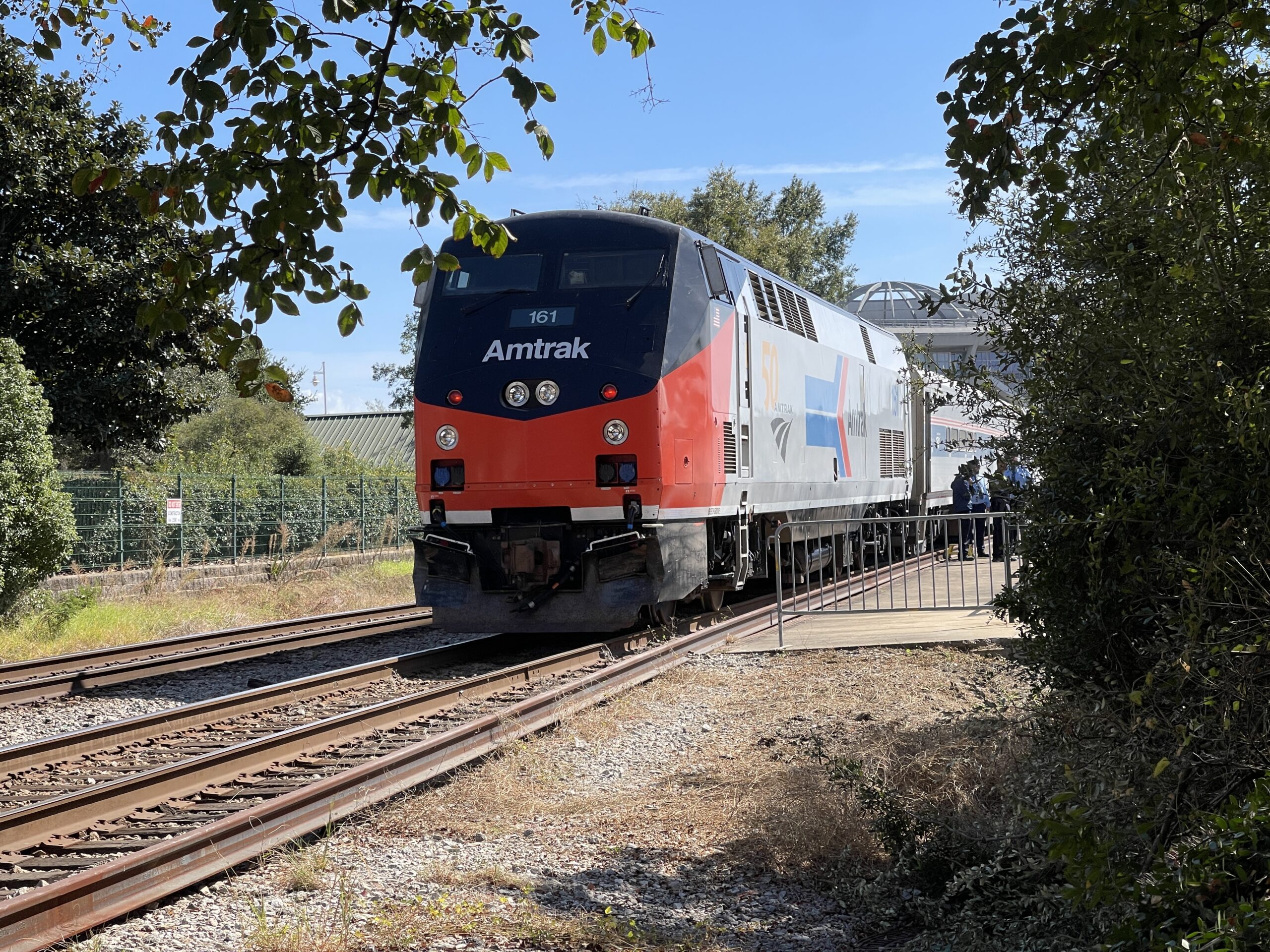
MOBILE, Ala. — Early performance data from the Southern Rail Commission shows strong demand and customer satisfaction for Amtrak’s new Mardi Gras Service connecting the central Gulf Coast, underscoring continued interest in restored passenger rail along the corridor.
From Aug. 18, 2025 through Jan. 31, 2026, the service carried approximately 70,400 passengers, generating $2.4 million in ticket revenue and an additional $326,700 in food and beverage sales. The average fare per passenger was $34.
“In less than 6 months, the Amtrak Mardi Gras service has already exceeded our annual ridership projections. This means great things for tourism in Mobile specifically our restaurants, attractions and hotels receiving considerable activity in their businesses,” said Visit Mobile President and CEO David Clark. “We’re grateful for Amtrak’s partnership and for our mayor and city council’s continued resources, belief and support of this opportunity.”
Operational performance has also remained solid, with an 88% on-time arrival experience — defined as arriving within 15 minutes of the scheduled time — and a 94.1% customer satisfaction rating, the highest among Amtrak’s state-supported services as of Jan. 22, 2026. All figures are preliminary and subject to change.
“These early results confirm what we believed from the beginning — people want convenient transportation options along the Gulf Coast, and they’re using them,” said Bradley Byrne, president and CEO of the Mobile Chamber. “Strong ridership shows this service is already creating value for residents, visitors and local businesses, and it strengthens the case for continued investment in regional connectivity.”
The restored route provides a new travel option for commuters, day-trippers and tourists while supporting downtown economies across the corridor. Local businesses, hospitality operators and event venues benefit from increased visitor access, particularly during peak travel weekends and festival seasons.
Community and transportation leaders will continue monitoring performance as the service matures, but the initial months suggest the corridor is positioned to become an important mobility and economic development asset for the region.