
15th Annual Gulf Coast Trauma Symposium draws healthcare professionals
MOBILE, Alabama (March 26, 2026) – More than 300 healthcare providers from across the Southeast gathered for the 15th Annual Gulf Coast Trauma Symposium March 24-25 at the Golden Nugget Biloxi Hotel & Casino in Biloxi, Mississippi.
The annual symposium, hosted by the Division of Trauma, Acute Care Surgery and Burns at USA Health University Hospital in conjunction with the Alabama Gulf EMS System, draws healthcare providers, community leaders and other stakeholders to collaborate on improving trauma care for the region.
“It’s events like this – where we all come together with prehospital, intrahospital, and posthospital care, and by all getting on the same page, all looking for opportunities to constantly improve – that make our region much safer,” said Jon D. Simmons, M.D., FACS, chief of trauma for USA Health and chief of the Division of Trauma, Acute Care Surgery and Burns at University Hospital.
Simmons said concentrating on disaster preparedness was one of his goals for the symposium. “It is just always good to try and predict the types of mass casualty incidents that may occur in our region and make sure we’re all on the same page in case that disaster does occur,” he said.
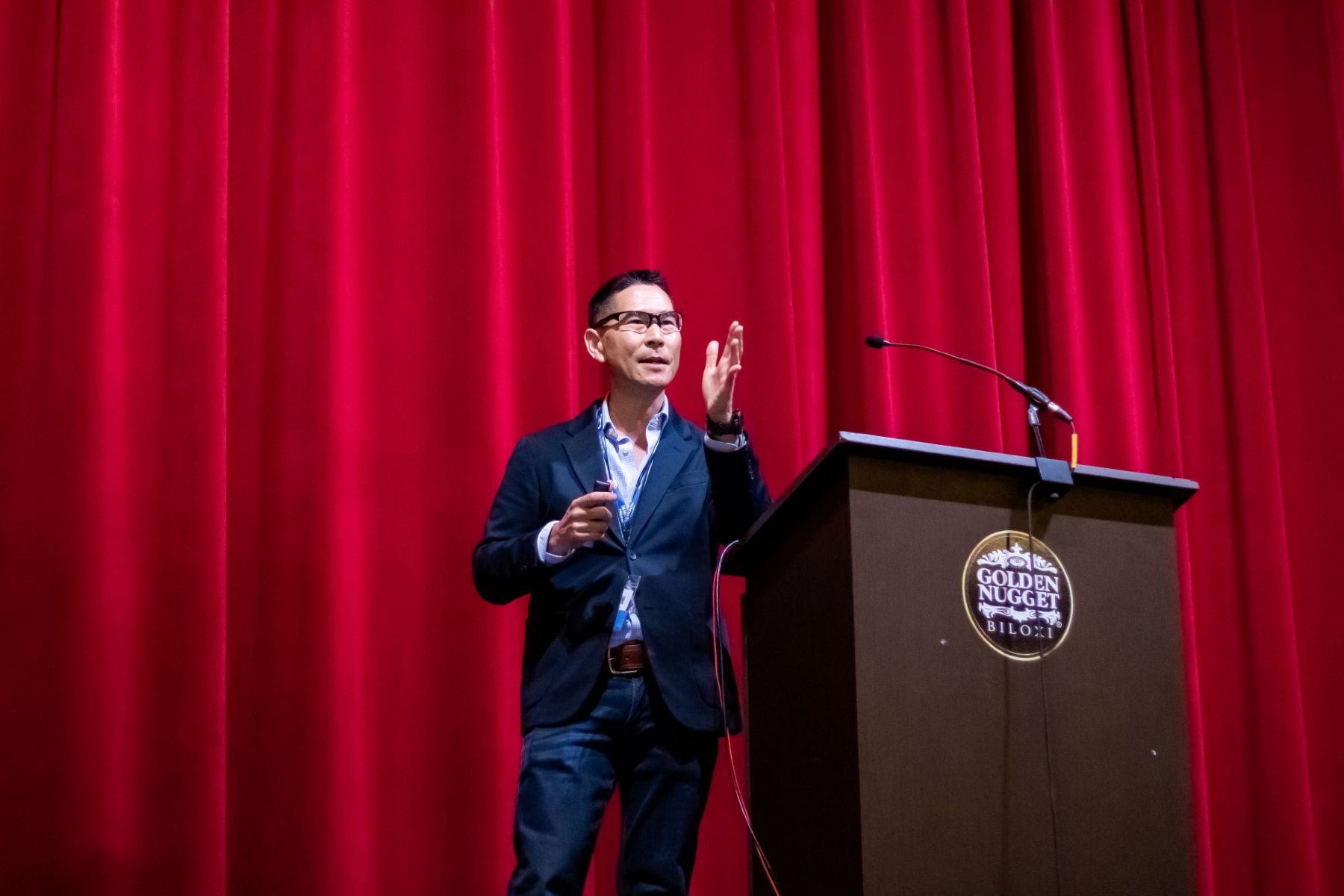
Kenji Inaba, M.D., FACS, vice chair of the Department of Surgery and chief of the Division of Trauma, Acute Care Surgery and Surgical Critical Care at Keck Medicine of the University of Southern California, gave the William A.L. Mitchell Endowment Lectureship, titled “Los Angeles 2028, Active Shooter at a Mass Gathering Event Preparation.”
Inaba, who is also a police officer with the Los Angeles Police Department, focused on the law enforcement side of the medical response at potential mass casualty events – particularly the Summer Olympic Games, coming to Los Angeles in 2028. “If you ever think of a mass gathering event where something might happen, the Olympics fulfill every bit of that description,” he said.
Inaba recounted lessons learned from previous mass casualty incidents such as the Boston Marathon bombing in 2013, which killed several people and injured hundreds, and the 1972 Summer Olympics hostage crisis in Munich, in which terrorists targeted the Israeli Olympic team, killing 12. He said Los Angeles police and others are well into preparations for the 2028 Summer Olympics.
In addition, Inaba touched on lessons learned during two mass casualty incidents in California – the Glendale train collision in 2005, which killed 11 and injured 177, and the Chatsworth train collision in 2008, which killed 25 and injured 135. In the first crash, there was no unified triage system. “More than half of the severely injured patients, and 71% overall, were sent to a non-trauma center,” he said. “It was clearly a massive failure of our system for patients to be routed to non-trauma centers,” he said.
In 2008, however, a new routing system was in place, led by a fire captain with access to a bed census at all area trauma centers. “The important thing to remember is that most patients aren’t going to need ICU beds. Most patients are not going to need surgery,” he said. “So, getting the right patients to the right trauma center … is the key.”
On Wednesday, Juan Duchesne, M.D., presented the John Emory Campbell Lectureship, titled “Selective Prehospital Advanced Resuscitative Care.” Duchesne is director of the Level I trauma center at the University of Mississippi Medical Center in Jackson and an expert in prehospital blood transfusion programs.
“There are many funding and legislative barriers preventing our ambulances from carrying blood transfusions, but our patients need it, and they often do not survive because our EMS personnel lack that precious resource,” Duchesne said.
The symposium also featured panel discussions and presentations on a variety of topics including intimate partner violence and the role of ECMO in trauma patients. ECMO, or Extracorporeal Membrane Oxygenation, provides advanced temporary life support for patients with severe, potentially reversible heart or lung failure. USA Health Providence Hospital has the only ECMO program on the Alabama or Mississippi Gulf Coast.
Cutline: Kenji Inaba, M.D., FACS, chief of the Division of Trauma, Acute Care Surgery and Surgical Critical Care at Keck Medicine of the University of Southern California, speaks at the 15th Annual Gulf Coast Trauma Symposium on March 24 in Biloxi, Mississippi.
About USA Health
USA Health, the health system for the University of South Alabama, the Flagship of the Gulf Coast, is the leading academic health system in the region. With more than 40 care delivery locations, including University Hospital, Children’s & Women’s Hospital, Providence Hospital and the Mitchell Cancer Institute, and physician practices throughout the area, the health system melds clinical care, research and healthcare education into the most advanced medical care in the region.



Stay Connected
Fill out and submit the form below to get regular updates from Mobile Chamber delivered directly to your inbox.